Economic
What is the financial value of sport, for individuals, communities, and Australia as a country?
The measurement of the sport sector’s economic contribution to the economy is multi-layered, including direct, indirect, and induced economic activities, increased workforce productivity, and the value of volunteers. 1, 18, 27
Outside of standard economic value categories there can also be a notional sense of ‘value’ related to personal and community wellbeing and national pride derived from sport participation or perceived affiliation with sport. 18, 19
A dollar value can be estimated based on factors such as employment (including volunteer service), health cost savings, economic activity, infrastructure and facilities, and events and tourism. 18
The role of sport

Sport creates significant value for Australia, with an estimated $7 returned on every dollar expended in the sector (based on direct economic benefits, the network of volunteers and not-for-profits, avoided health costs, and education benefits). 1, 21

Community sport participation in Australia generates an estimated $18.7 billion annual value in social capital (such as, community engagement and identification, reciprocity, generalised and personalised trust). 2

A number of Australian sport and active recreation organisations (including Surf Life Saving, Equestrian, Golf, Football, AFL, Motorsport, Cycling, SportWest, Royal Life Saving, Mountain biking, Surfing, have produced reports highlighting their contribution to the Australian community and economy. 3, 4, 5, 6, 7, 8, 17, 21, 22, 23, 24, 26
Sport sector economic contribution

Economic activity
Spending in sport comes from a variety of sources: 1, 25
- User pay (including sports related fees, equipment, clothing, training)
- The private sector (including sponsorship and marketing spend)
- Local government (mostly infrastructure spending)
- State government (including sports participation, high performance pathways, infrastructure)
- Australian Government (including grants and programs from the Australian Sports Commission (ASC) and other Federal departments)
Community sport infrastructure in Australia helps generate an estimated $6.3 billion worth of economic benefits. This is based on the construction, maintenance and operation of facilities and the increased productivity of those who are physically active as a result of such infrastructure. 9
The Australian sports sector is estimated to generate $32.2 billion in annual sales, resulting in a contribution to GDP of approximately $14.4 billion. 10
Employment and education
The Australian sports industry is estimated to support 128,000 full-time equivalent (FTE) jobs, around 1.5% of the FTE workforce in Australia. 10
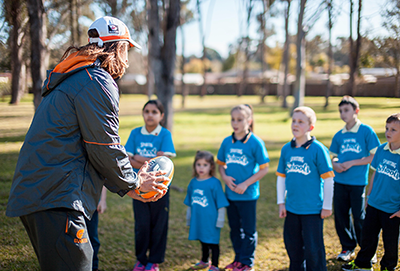
The education benefits that result from children playing sport are worth an estimated $5 billion annually. These benefits are from: 1
- improved cognitive development, learning, and retaining information
- building critical life skills
- staying in school longer
- higher lifetime earnings (through better grades and staying in school longer).
The sector employs more than 220,000 people, with volunteers donating around 158 million hours to sport each year – equivalent to nearly 90,000 additional full-time jobs and $3 billion in economic value. 1
Employers and university students agree that engagement in sport, especially in voluntary leadership or management roles, provides ‘added value’ beyond standard academic qualifications. 11
Research suggests that participation in sport across the age course can contribute to improved labour market outcomes, such as employability and higher average incomes compared to those who do not participate. The mechanisms and impact for different population groups may vary. 12, 20, 29, 30
Health and wellbeing
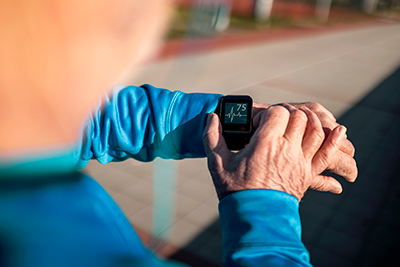
Sport creates an estimated $29 billion of net health benefits each year through reduced healthcare costs and early mortality. 1
Community sport infrastructure helps generate: 9
- $4.9 billion worth of health benefits
- $5.1 billion worth of social benefits
The estimated cost of treating acute physical activity related injuries was $1.2 billion, while managing health conditions due to physical inactivity (such as coronary heart disease and type 2 diabetes) cost the health system $2.4 billion (2018-19). Overall, sport and physical activity have a net positive impact on the Australian health system. 14
The social benefits of playing community club-based sport once per week are estimated to be worth $5,932 per participant, per year. 2
Events and tourism
Australia has been successful in attracting many of the world’s biggest sporting events. These events can stimulate economic activity, encourage domestic and international tourism, provide international exposure through broadcast and media, and generate other potential economic and social benefits. 13
The 2015 Asian Cup event created $128 million in direct expenditure and a 6% increase in club registrations affiliated with Football Australia. 16
The Gold Coast 2018 Commonwealth Games helped create an estimated: 15
- $2.5 billion increase in Gross State Product (GSP) over 9 years; including 21,000 jobs.
- 1.3 million visitors leading up to, during, and after the Games. Spending more than $1.1 billion in the region.
- 100 national and international events secured in Queensland.
Challenges
Economic analyses of the sport sector often use very different methodologies and/or data points (for example, GDP, social return on investment (SROI), looking at the economic contribution of only volunteers, or a specific sport). This makes it difficult to get a clear, overall view of the value of sport, or to compare figures between reports, organisations, or time periods. 3, 18, 19, 21
Reports are also rarely replicated across time periods, and data can quickly become outdated. Some statistics or data may only be collected intermittently, may not clearly distinguish between sport and related industries, or may not be available without expensive subscriptions or analysis. 3, 19
Using consistent methods and improving data currency and availability would help to address these challenges. Which would, in turn, strengthen the evidence base for the economic value of sport. 18, 28

REFERENCES
- Intergenerational Review of Australian Sport - 2017, BCG Consulting for the Australian Sports Commission, (2017).
- Economic value of community club-based sport in Australia (2018), Australian Sports Commission and the Griffith Business School at Griffith University, Queensland, (2018).
- Between the red and yellow flags: The social and economical value of Surf Life Saving Australia, opens in a new tab, Deloitte for Surf Life Saving Australia, (2020).
- Equestrian brings more than $1Billion to the economy, opens in a new tab, Equestrian Australia, (February 2017).
- Community Benefits of Golf in Australia, opens in a new tab, Australian Golf Industry Council (AGIC), (2023).
- Community impact of football in New South Wales, opens in a new tab, SBP for Football NSW and Northern NSW Football, (June 2018).
- Value of a community football club, opens in a new tab, La Trobe University for the Australian Football League and AFL Victoria, (2015).
- Australian Motorsport – An economic powerhouse, opens in a new tab, Motorsport Australia, (November 2021).
- The value of community sport infrastructure: Investigating the value of community sport facilities to Australia (2018), KPMG for the Australian Sports Commission, (2018).
- Sports Industry Economic Analysis (2018), KPMG for the Office for Sport, Department of Health, (March 2020).
- The impact of engagement in sport on graduate employability: implications for higher education policy and practice, opens in a new tab, Kerry Griffiths, Steve Bullough, Simon Shibli, et al., International Journal of Sport Policy and Politics , Volume 9(3), pp.431-451, (2017).
- The Impact of Engagement in Sport on Graduate Employability: Final report, opens in a new tab, Kerry Allen, Steve Bullough, Doug Cole, et al., Sheffield Hallam University for British Universities & Colleges Sport (BUCS), (2013).
- Major sporting event impact and legacy, Clearinghouse for Sport, (accessed 19 May 2026).
- Economics of sports injury and participation report, , opens in a new tabAustralian Institute of Health & Welfare, (updated 5 September 2023).
- Gold Coast 2018 Commonwealth Games Post Games Report, opens in a new tab, Office of the Commonwealth Games, Department of Innovation, Tourism Industry Development and the Commonwealth Games, Queensland Government, (2019).
- Annual report 2014-2015, opens in a new tab, Australian Government, Department of Health, (2015).
- The Australian Cycling and E-Scooter Economy in 2022, opens in a new tab, We Ride Australia, (2023).
- The Social Impact of Sport: Unlocking the potential of sport to drive social transformations, opens in a new tab, United Nations Educational, Scientific and Cultural Organisation (UNESCO), (2024).
- Literature review of the methodological evidence base for assessment of the economic and social value of sport and active recreation, opens in a new tab, Keane, L., Hoare, E., Bellew, B., et al., Prepared for the NSW Office of Sport. Sport and Active Recreation Intervention and Epidemiology Research (SPRINTER) Group, The University of Sydney, (2017).
- Heterogeneous sports participation and labour market outcomes in England, opens in a new tab, Michael Lechner, Paul Downward, Applied Economics, Volume 49(4), pp.335-348, (2017).
- Sport in Western Australia: Social Return on Investment, opens in a new tab, SportWest, (2022).
- Economic Benefits of Australia's Public Aquatic Facilities, opens in a new tab, Barnsley, P. Peden, A. Scarr, J., Royal Life Saving Society – Australia, (2017).
- Mountain Biking in Australia: An Economic and Participation Analysis, opens in a new tab, GHD for AusCycling, (2021).
- A national assessment of the economic and wellbeing impacts of recreational surfing in Australia, opens in a new tab, Ana Manero, Asad Yusoff, Mark Lane, et al., Marine Policy, Volume 167, (2024).
- Funding for major sporting codes: a quick guide, opens in a new tab, Research Paper Series 2024-25, Nell Fraser, Parliamentary Library, Commonwealth of Australia, (2025).
- Economic, Social and Health Impacts of Sport and Active Recreation in Queensland, opens in a new tab, Adept Economics for Active Queenslanders Industry Alliance (AQIA), (2024).
- Informal sport as a health and social resource, opens in a new tab, Jeanes, R., O’ Connor J., Penney, D., et al., Monash University, (2023).
- Lessons Learned and Call for Action From Building an International Consensus on Social Return on Investment Modeling of Physical Activity and Sport, opens in a new tab, Inés Nieto, Xián Mayo, Larissa Davies, et al., Journal of Physical Activity and Health, Volume 22(7), pp.768-771, (2025).
- The outcomes related to sport and physical activity: A better understanding of health, social, labour and academic impacts, opens in a new tab, Cristina Muniz, Paul Downward, chapter in 'Sports (and) Economics', Jaume Garcia, Funcas Social and Economic Studies, 7, pp.393-423, (2019).
- No Revenge for Nerds? Evaluating the Careers of Ivy League Athletes, opens in a new tab, Natee Amornsiripanitch, Paul Gompers, George Hu, et al., National Bureau of Economic Research, Working Paper 31753, (2023).
See more on this topic:
Last updated: 20 May 2026 Content disclaimer: See Clearinghouse for Sport disclaimer
Is this information complete? The Clearinghouse for Sport is a sector-wide knowledge sharing initiative, and as such your contributions are encouraged and appreciated. If you would like to suggest a resource, submit a publication, or provide feedback on this topic, please contact us.